Latest News Articles
About
Newsletter
Monthly insights on Europe’s evolving space sector
2026
Human curiosity is the silent engine of civilization, a restless urge that has propelled us from the flicker of campfires to the silent expanse of the vacuum. It is not merely a desire for data, but a fundamental survival mechanism and an expression of the human spirit. Space exploration represents the ultimate manifestation of this trait; it is where our oldest questions—
where did we come from? and are we alone?—meet our most advanced technology.
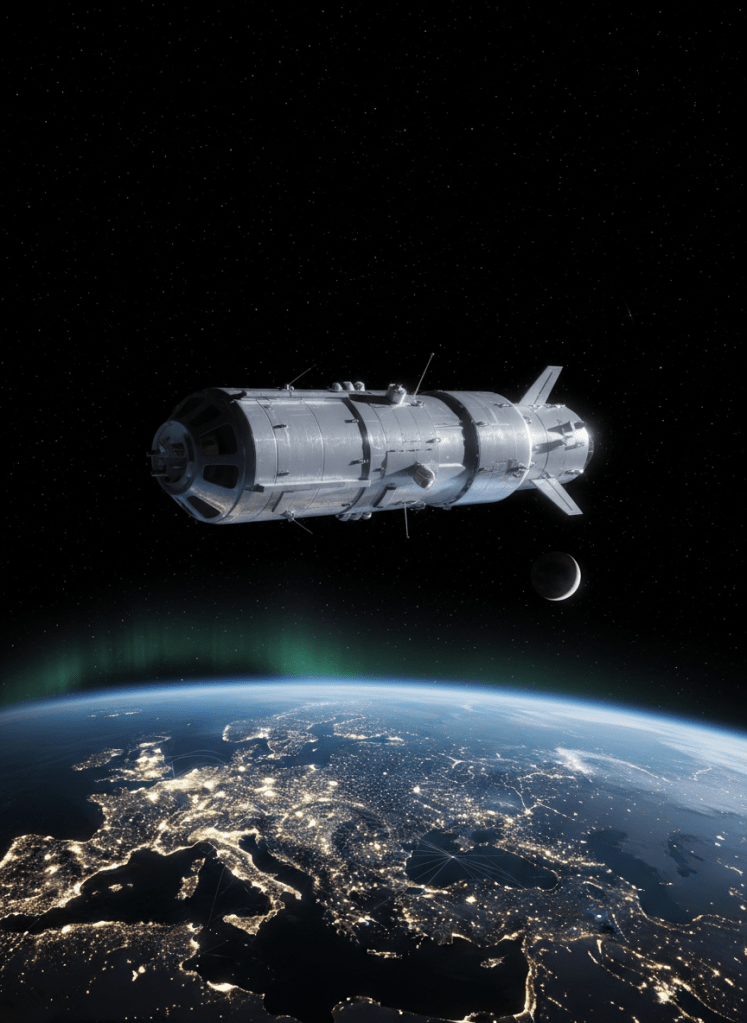
The importance of space travel lies in its ability to force us beyond the comfort of the known. When we look toward the stars, we are forced to innovate, creating solutions for life support, propulsion, and sustainability that eventually trickle back down to improve life on Earth. However, the psychological impact is perhaps even more profound. Stepping off our home planet provides a “cosmic perspective,” a humbling realization of Earth’s fragility and the interconnectedness of all its inhabitants.
In an era often defined by terrestrial divisions, the collective pursuit of the unknown acts as a unifying bridge. Curiosity drives us to build telescopes that peer into the dawn of time and rovers that tread the dust of alien worlds, not because it is easy or immediately profitable, but because the unknown is a challenge we cannot ignore. Ultimately, space exploration is an investment in our future potential. It ensures that humanity remains a species of seekers, forever expanding the boundaries of what is possible.
Should we focus more on the technological breakthroughs sparked by space travel or the philosophical shift it creates in our worldview.

Monthly insights on Europe’s evolving space sector


