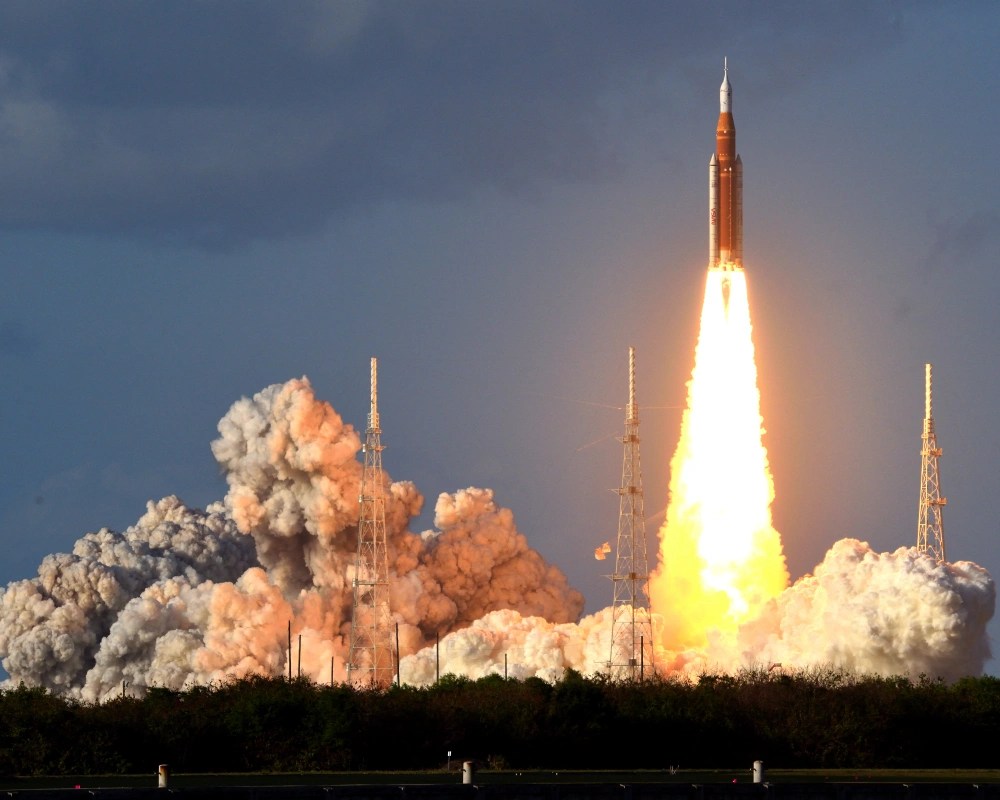
Artemis II isn’t just about a single flight; it is the culmination of decades of shifting space policy, engineering breakthroughs, and a fundamental pivot in how humanity views the Moon. While Artemis I proved that the hardware could survive deep space, Artemis II is the moment the program becomes human. It represents the first time since 1972 that people will leave Low Earth Orbit (LEO) to venture into the lunar proximity.
The Post-Apollo Vacuum and the Constellation Roots
To understand Artemis II, one must look back at the gap left by the Apollo program. After Apollo 17 returned in 1972, NASA’s focus shifted to the Space Shuttle and the International Space Station (ISS). For forty years, humans stayed within 250 miles of Earth.
The DNA of Artemis II actually began in the mid-2000s with the Constellation Program. Aimed at returning to the Moon by 2020, Constellation introduced the concept of the Orion Crew Capsule and the Ares V rocket. When Constellation was cancelled in 2010 due to budget and schedule overruns, the Orion capsule survived, rebranded as a Multi-Purpose Crew Vehicle (MPCV). The heavy-lift rocket evolved into what we now know as the Space Launch System (SLS).
Forging the Hardware
Artemis II relies on two massive pillars of technology: the SLS and the Orion spacecraft.
The SLS is the only rocket currently capable of sending a crewed spacecraft directly toward the Moon. Its core stage, standing over 200 feet tall, utilizes four RS-25 engines (the same heritage engines that powered the Space Shuttle). Flanking it are two five-segment Solid Rocket Boosters, providing the initial 8.8 million pounds of thrust needed to escape Earth’s gravity.
The Orion capsule, built by Lockheed Martin, is the “home” for the Artemis II crew. Unlike the Apollo capsules, Orion is designed for longevity and versatility, featuring advanced glass-cockpit displays, self-reliant power systems provided by the European Space Agency’s (ESA) Service Module, and a heat shield capable of withstanding 5,000 degrees Fahrenheit upon re-entry.
The Artemis I Precedent
The history of Artemis II is inextricably linked to the success of Artemis I in late 2022. That uncrewed mission was a grueling 25-day test flight that pushed Orion to its limits. It traveled further than any spacecraft built for humans had ever gone, proving that the SLS could launch reliably and that Orion’s heat shield could protect its passengers during a high-speed “skip entry” into Earth’s atmosphere.
With the hardware “man-rated” by the success of Artemis I, NASA moved into the final assembly phase for the second mission—the one that would put “boots in the cockpit.”
The Crew: A New Era of Exploration
In April 2023, NASA and the Canadian Space Agency (CSA) announced the four individuals who would make history on Artemis II. This selection was a symbolic departure from the Apollo era, reflecting a more global and inclusive approach to exploration:
- Reid Wiseman (Commander): A veteran of the ISS known for his leadership and technical expertise.
- Victor Glover (Pilot): The first person of color to be assigned to a lunar mission, bringing experience from the SpaceX Crew-1 mission.
- Christina Koch (Mission Specialist): The record-holder for the longest single spaceflight by a woman, becoming the first woman to head toward the Moon.
- Jeremy Hansen (Mission Specialist): Representing Canada, marking the first time a non-American has left Earth orbit.
The Mission Profile: A High Earth Orbit Dance
Unlike the Apollo missions, which often used a direct “Lunar Orbit Insertion,” Artemis II will follow a Hybrid Free Return Trajectory.
- Launch and High Earth Orbit: After liftoff from Kennedy Space Center, the SLS will place Orion into a preliminary orbit. The crew will spend nearly 24 hours in a High Earth Orbit (HEO). This is a critical safety period where the crew will test the life support and communication systems while still close enough to Earth to abort if something goes wrong.
- Trans-Lunar Injection (TLI): Once checked out, the Interim Cryogenic Propulsion Stage (ICPS) will fire, sending the crew toward the Moon.
- The Lunar Flyby: The crew will not land. Instead, they will use lunar gravity to “whip” around the far side of the Moon, reaching a distance of approximately 4,600 miles above the lunar surface. From this vantage point, they will see the “Earthrise” in person—a sight unseen by human eyes for over half a century.
- The Return: The trajectory is designed so that lunar gravity naturally pulls the spacecraft back toward Earth without requiring a massive engine burn, a safety feature known as a “free return.”
Challenges and Delays
The history of Artemis II has not been without its hurdles. Originally slated for earlier in the decade, the mission has faced several “slip” dates. NASA pushed the launch (currently targeted for no earlier than late 2025) to allow for more rigorous testing of the life support systems and to address concerns regarding the Orion heat shield’s performance during Artemis I, where some unexpected charring occurred.
These delays highlight NASA’s “safety-first” culture in the post-Shuttle era. Because Artemis II is a developmental flight, every sensor and valve is scrutinized to ensure the crew’s survival in the harsh radiation environment beyond the Van Allen belts.
The Legacy of Artemis II
Artemis II is often called a “rehearsal,” but that undersells its importance. It is the bridge between the “proving ground” of Earth’s orbit and the “sustained presence” on the lunar surface. It validates the systems that will be used for Artemis III—the mission intended to land the first woman and person of color on the South Pole of the Moon.
The history of Artemis II is a story of persistence. It is the story of taking 1960s ambition and marrying it with 21st-century technology and values. When those four astronauts look out the window and see the lunar craters passing beneath them, they won’t just be repeating history; they will be starting a new chapter where the Moon is no longer a destination to be visited, but a workplace and a stepping stone to the stars.
By successfully completing Artemis II, NASA will prove that the SLS/Orion stack is a viable “bus” for deep space travel. It sets the stage for the Lunar Gateway (a small space station in lunar orbit) and, eventually, the human exploration of Mars.
 SpaceLife